
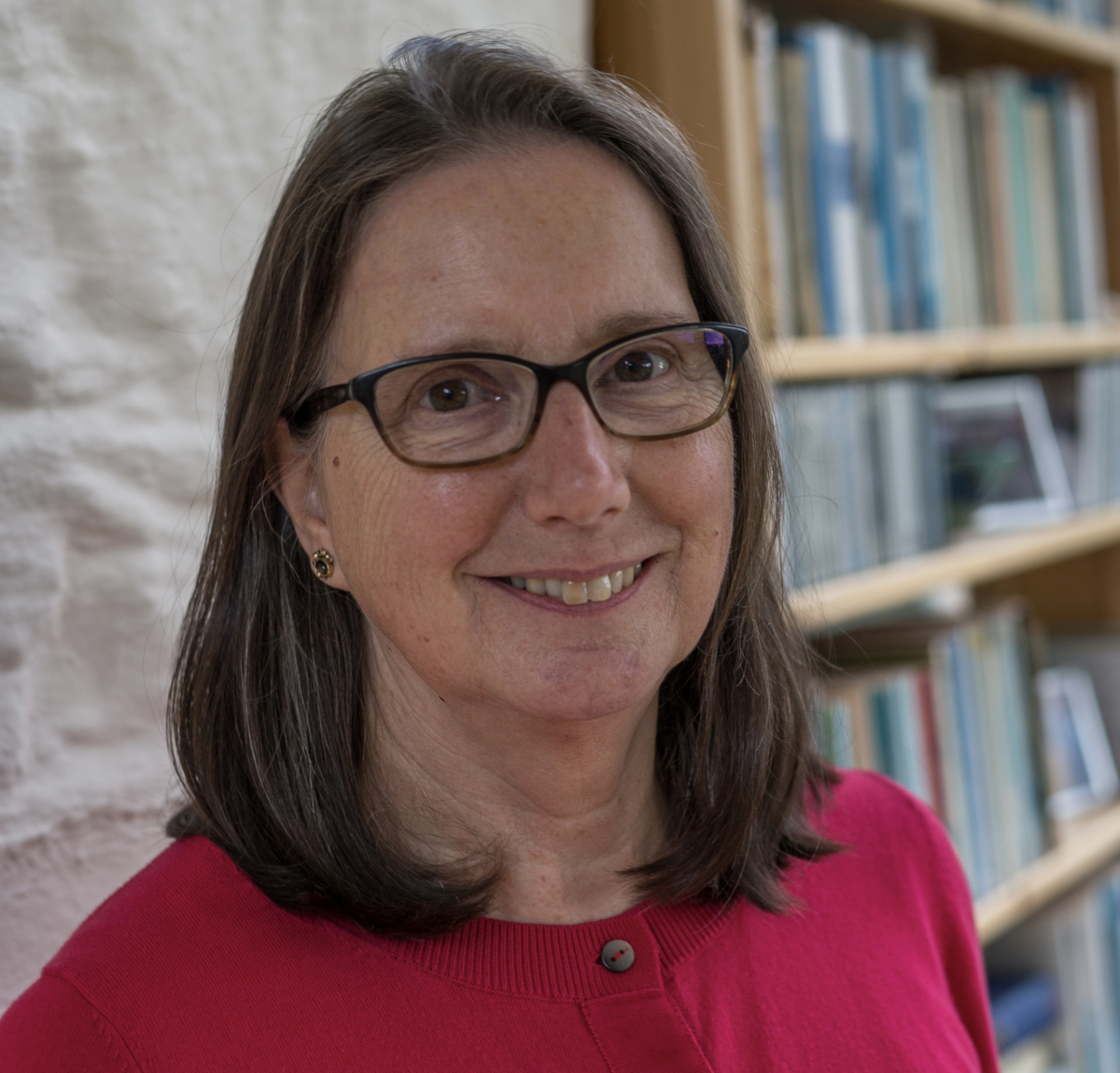
 How did I begin on my midwifery path? Well, I began as a nurse, but was able to do the joint nursing and social sciences degree at Edinburgh University; this was an unusual route in the early 1970s, at a time when most nurses trained solely in hospitals. This taught me to think and to question, and once I began, I never stopped.
I loved midwifery, but I trained at a time when midwifery was in dire straits – episiotomies were routine, labour was supposed to be done lying down, mums and babies were separated, breastfeeds were timed and all breastfed babies were topped up with formula – with no evidence base for any of this.
Soon after qualifying I found myself a rare research job in the Medical Research Council (MRC), in a small multidisciplinary team examining breastfeeding, and this changed the whole shape of my career; I fell in love with research.
My mum had breastfed us all, but at the time the breastfeeding rate in Glasgow, where I was born, was at a catastrophic low of under 10%, and change was badly needed. My colleagues in the MRC trained me to ask – and answer – questions rigorously. I was respected as a contributing member of the team; I was encouraged to design my own studies, and to do a PhD, and I believe I was the first midwife in the UK to gain one.
There was no support infrastructure for research by midwives, and a clinical-academic career path simply didn’t exist, and although I wanted to combine the two and when I returned to practice I had to pretend I didn’t have the PhD! From then on, I looked for ways for these two passions of mine to synergise.
My next step was a sideways one – I was ready for some adventure, so I went to Canada to work in a university for a few years. Canada was moving to degree-training all their nurses, but on the other hand they were the only high-income country with no legal recognition of midwives! I couldn’t figure out how the babies got born without midwifery care.
As well as doing research in maternity care and women’s health, I taught nursing, specifically maternal and child health and community health, and became involved with the legalisation of midwifery, co-founding the Alberta Association of Midwives and becoming their first president. I was learning how to create change politically.
I returned to the UK in the late 1980s to lead a new programme of work with the National Perinatal Epidemiology Unit (NPEU) at Oxford University. There I was senior researcher and Director of the Midwifery Research Initiative, a national programme supported by both the government and the RCM. It was a very exciting time to be in the NPEU; several major studies of midwifery care were conducted, Effective Care in Pregnancy and Childbirth was published, and the methods of systematic reviews were being developed.
We ran lots of studies and set up the UK MIRIAD research register, supporting midwives in research to network and collaborate. One of the phenomenal people I worked with during those Oxford years was Jennifer Sleep, a midwifery research pioneer, who was one of The Iolanthe Midwifery Trust’s first Chairs. Her research challenged the practice of episiotomies as the norm for almost everyone at the time.
So I have always been passionate about improving care for mothers and babies, and I have always had a focus on mitigating the impact of inequalities, such as poverty. I have always conducted research in collaboration with women and families, and with the whole multidisciplinary staff team.
Since those early days I have had the opportunity to establish my own research unit, the Mother and Infant Research Unit - first in Leeds, then York and finally in Dundee. Over all those years I have worked with wonderful, talented and committed colleagues both in the UK and internationally, developing research that has had an impact on care and on policy, and educating students, both under- and postgraduate.
We may think that times are hard for midwives at the moment. But there has been real, positive progress. When I first began, midwives couldn’t even apply for research grants, or present papers, without a doctor co-applying and co-authoring. Education was not informed by evidence, but by opinion.
Just before I retired, I gave a conference talk at the Labour and Birth Research Conference in Cumbria in September. I looked round the room at perhaps 120 people, all involved in research, from dozens of different countries. It was hard to believe there used to literally no research in our field. I am blown away now by the maturity of the research networks and structures. And we have come a long way.
So this is where Iolanthe comes in for me. The Trust was founded just as I went to Canada, and when I came back in 1988, I was cheering it on from the sidelines because it was the first strong example of an organisation actively supporting midwives in research. Midwives now publish in The Lancet and other high impact journals, and there is a strong global community of midwifery researchers.
Like myself back in the early days when I was seeing harm done, when I realised that evidence really mattered, when we published our breastfeeding research and it began to make a difference, many of today’s midwives see what is wrong with practice and use research to challenge and improve it.
Combining evidence with listening to women and families is essential. This approach was invaluable when I led the recent Northern Ireland maternity review and took part in the Wales assessment; listening to families describing what they want and need, and listening to staff about the care they want to provide. It’s incredibly important that we do all we can to support all women, babies and families with the care they need, want and deserve, that we keep them safe, and that we do this with respect.
What message would I give to midwives and student midwives now? I’ve always said, if you want to be a midwife, not only do you need to learn the knowledge and skills of the profession, but you need to be a troublemaker when necessary!
Good midwives always find themselves going up against the grain of the system. It’s not that the system is always wrong, but rather than you need to do your best for your families, stand up for them and advocate for them. You have to be able to challenge and argue, with knowledge and sensitivity, to ensure all women and babies have the best possible care.
When I was leading the work on the NMC standards of proficiency, and the Northern Ireland review, I was able to meet a lot of midwifery students. I have been so impressed with them. They are committed, they know their stuff, they are determined in a way I’m not sure my generation was, and they want to make a difference.
These are challenging times, perhaps the most challenging I’ve seen in my career. But we can’t lose that commitment, it is essential for every woman, every baby, every family. Students and newly qualified midwives have important perspectives to bring and their voices matter.
At the Iolanthe Midwifery Trust, we see midwives and student midwives stepping up to meet those families’ needs. Back in my Oxford days, my colleague Professor (now Sir) Iain Chalmers was asked by the House of Commons Health Select Committee why midwives needed to conduct research. He answered “midwives ask different questions.” The Iolanthe Trust supports midwives and students to keep asking, and answering, those critically important questions.