 As my doctoral research was coming to an end, I became more and more aware that sharing research findings is as important as conducting the research.
There is no point in having important findings and then these being difficult to access for the healthcare professionals that need to hear about them.
That is why I wanted to organise a collaborative conference to share research findings from a range of studies from like-minded researchers and organisations, all with a focus on improving healthcare and support for women and families with children’s social care involvement during the 1001 days.
With the support from colleagues at the National Perinatal Epidemiology Unit at Oxford University, Lancaster University, Birth Companions, King’s College London and the NIHR Applied Research Collaboration South London, we held a hybrid event on July 15th. The involvement of women with lived experience of social care involvement was crucial, and they helped shape the programme, as well as contributed through various sessions on the day.
The event profiled individuals with lived experience, practitioners, researchers and policymakers, across talks and panel discussions, calling for more empathic systems that can handle complexity
and nuance. The conference attracted more than 100 people at King’s College London’s Bush House campus and 200 people online.
The Nicolette Peel Award enabled us to ensure women with lived experience were appropriately reimbursed for their contributions throughout the planning stages and the actual conference day. This is important to ensure research engagement is trauma-informed, safe and poverty-proof.
All women with lived experience had access to support throughout the day, to make sure they felt adequately supported, both with their practical and emotional needs.
We also wanted the conference to be creative and inspiring. Several components of the conference programme enforced this, such as the captivating performance from Clean Break Theatre Company. Scenes from Lost Mothers; which shone a light on the real experiences of women navigating pregnancy and separation from their babies while in prison, and is based on The Lost Mothers Project, carried out by Dr Laura Abbott at the University of Hertfordshire.
Just prior to the conference, our paper was published in BMJMedicine, I went onto Woman’s Hour on BBC Radio 4 to talk about it and it was also covered in the Guardian.
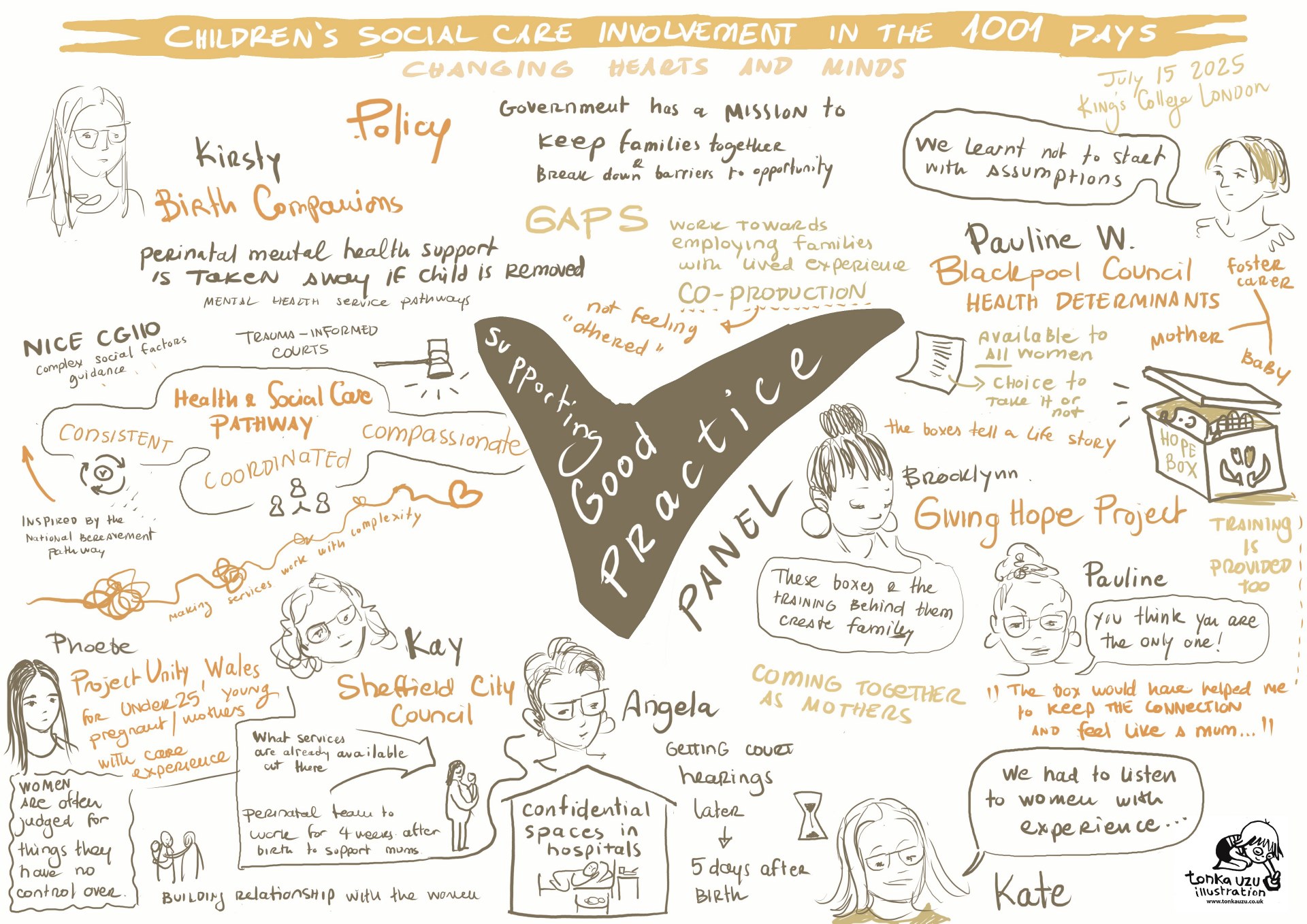
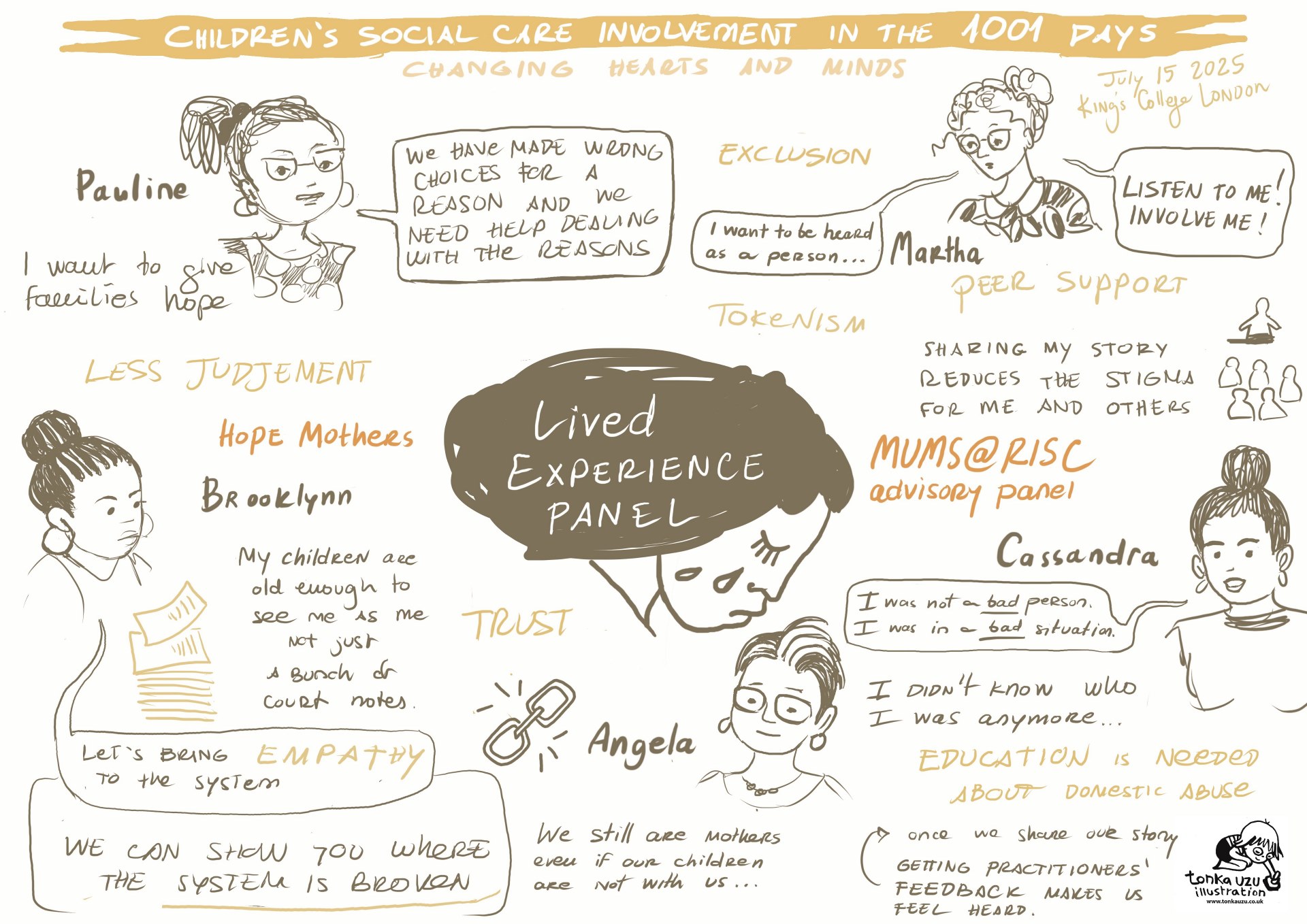
The work was developed alongside women with experience of the criminal justice system, or those at risk of entering it. Through the Nicolette Peel Award, we were also able to invite an illustrator, Tonka Uzu, to capture the highlights of the conference through live illustrations. These are available via this link.
Feedback from conference delegates was overwhelmingly positive, praising the extended involvement from women with lived experience, the creative formats and the powerful messages shared during the day. All of this was only possible through the generous funding from the Iolanthe Midwifery Trust and other funders that contributed.
The NIHR South London Applied Research Collaboration posted a blog about the conference, and Birth Companions also shared their own blogpost about the conference, with a focus on the lived experience involvement.