 In response to the growing need to address ethnic health inequalities and promote equitable care within maternity services (Felker et al., 2024; NMC, 2024), I organised a dedicated anti-racist training session for student midwives.
The workshop aimed to enhance participants’ knowledge and skills in advocating for women and birthing people from global majority communities, ensuring they receive respectful, compassionate, and culturally safe care.
By deepening our collective understanding of ethnic health disparities and their intersections with intergenerational trauma, the session sought to empower future midwives to challenge discriminatory practices and foster systemic change within maternity services.
To design and facilitate the session, I collaborated with Leah Lewin, an experienced educator and facilitator in anti-racist practice. The workshop content was developed collaboratively, aligning with my initial concept and ensuring it was both theoretically grounded and practically relevant.
The half-day online training combined reflective discussions and case studies, designed to help participants identify personal bias and critically examine their role in addressing racism within maternity care.
The practical component of the workshop encouraged students to explore real-life scenarios in which discriminatory attitudes or practices might occur and to discuss effective and safe ways to intervene. Through this approach, participants were supported to build confidence in recognising and responding to racism in a professional context.
A key emphasis was placed on self-awareness and resilience, helping students understand the emotional and psychological impact of confronting racism, both for those affected and for practitioners who advocate for equity.
This approach aimed to reduce the risk of vicarious trauma and support long-term engagement with anti-racist practices.
Initially, the workshop was targeted at student midwives based in Scotland. I shared information about the free online session through Scottish midwifery societies, social media platforms, peer support groups, and university online portals. Despite these efforts, the initial uptake was modest, with only sixteen students registering their interest.
To ensure the training reached a broader audience, I requested support from the Iolanthe Midwifery Trust to extend the invitation across the United Kingdom. Following this wider dissemination, twenty students registered their interest via email.
Prior to the session, reminder emails were sent to all registered participants. However, ultimately, twelve students attended the live online training, representing a range of universities. The smaller group size proved advantageous, allowing for more open discussion and deeper reflection.
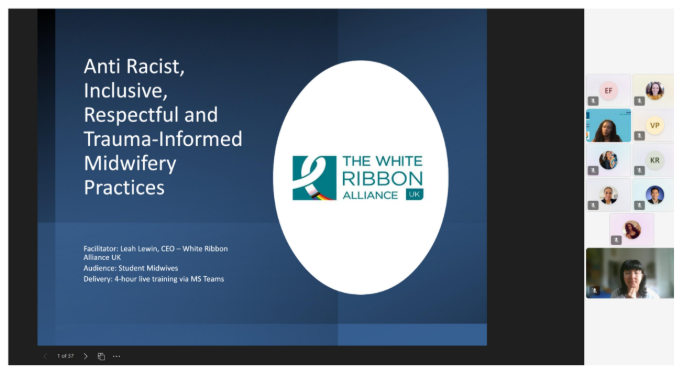 Participants engaged actively throughout the session, particularly in exercises that explored personal bias and strategies for challenging racism in clinical environments.
To evaluate the workshop’s impact, an online questionnaire was distributed immediately following the session and again two months later. Although the feedback provided valuable qualitative insights, the overall response rate was limited: three students completed the first follow-up survey, and two students completed the second one.
Respondents reported a significant increase in their confidence to raise concerns about discriminatory practices, to advocate for women and birthing people from global majority backgrounds, and to address racist behaviours within maternity settings.
Some of the questions included in the first questionnaire can be found below:
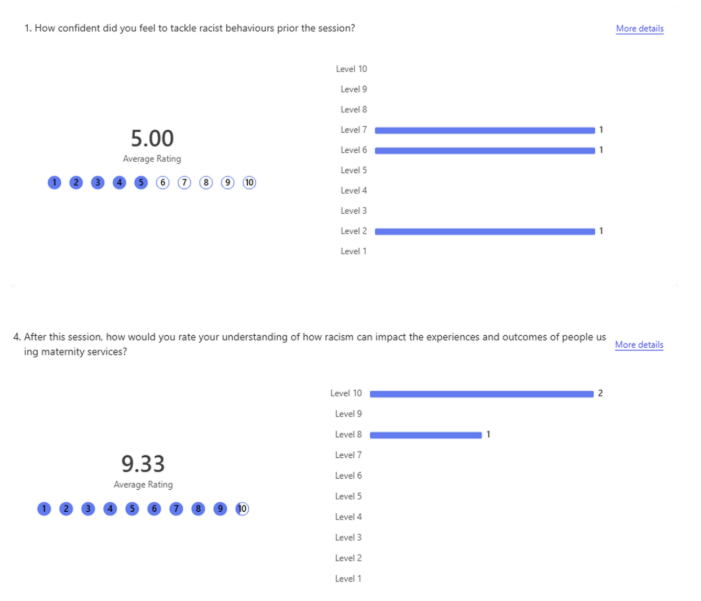
Participants also expressed appreciation for the safe and supportive learning environment, noting that the training encouraged self-reflection and practical action.
Some of the questions in the second questionnaire include:
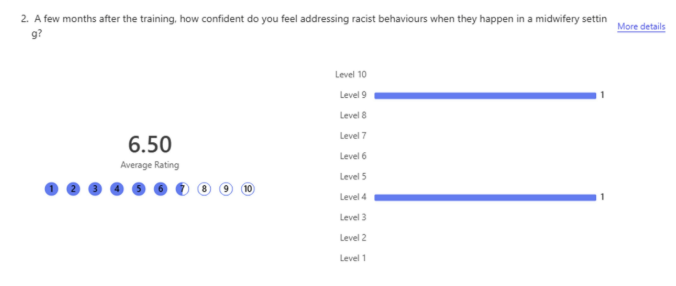
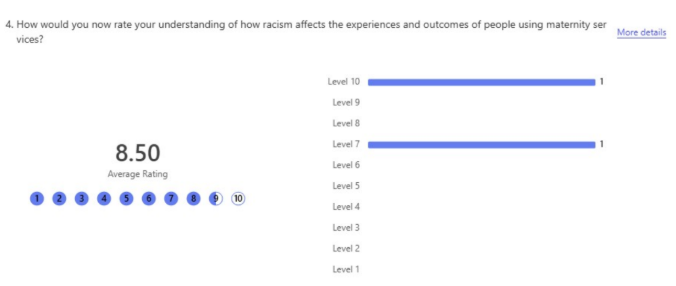
In summary, this anti-racist training session provided an important opportunity for student midwives to reflect critically on their professional responsibilities and to develop the skills needed to promote equity and inclusion in maternity care.
While attendance and evaluation responses were lower than anticipated, the feedback indicates a meaningful and positive impact on participants’ attitudes and confidence.
With additional funding and continued collaboration, future iterations of this workshop could be expanded to reach more students, include ongoing peer support, and gather more comprehensive outcome data to further demonstrate its long-term effectiveness.
Bibliography
Felker, A., Pater, R., Kotnis, R, Kenyon, S. and Knight, M. (2024) Saving Lives,
Improving Mothers’ Care. Lessons learned to inform maternity care from the UK and
Ireland Confidential Enquiries into Maternal Deaths and Morbidity 2020-22. Available
at: https://www.npeu.ox.ac.uk/mbrrace-uk/reports/maternal-reports/maternal-r...
2020-2022 (Accessed: 20 November 2025).
Nursing and Midwifery Council (NMC) (2024) Independent Culture Review. Available
at:https://www.nhsbmenetwork.org.uk/wp-content/uploads/2024/07/nmc-
independent-culturereview-july-2024.pdf (Accessed: 20 November 2025).